DUBAI
AESTHETICS
An independent study of the Dubai aesthetics market, answering one question with real search data: of everything on a clinic's menu, which treatment should actually carry the advertising?
infoIndependent study · not a client engagement
A Dubai aesthetic clinic typically offers injectables, skin, laser, body and threads. Its advertising almost always leads with the same two or three entry treatments, because those are the ones that feel easy to sell and cheap to promote.
That instinct is half right. Those treatments are cheap to click. They are also where every other clinic in the city has parked its budget, which is precisely what makes them expensive to win from.
So we took the menu apart and priced each treatment separately: how many people search it, how hard the auction is, and what a click actually costs. The answer is not the one most clinics are running.
Every treatment gets read on three axes at once. A treatment is only worth leading with when all three agree.
Volume, cost-per-click and competition figures are Google Ads data for the United Arab Emirates, English, pulled via DataForSEO in September 2026. Competition index is Google's own 0–100 auction-pressure score. Treatment price points and repeat cycles are commercial judgement, not measured data, and are flagged as such wherever they appear.
Full width = 5,400 searches/month.
Full width = index 100, Google's maximum auction pressure.
"Fillers dubai" and "hydrafacial dubai" each draw 2,400 searches a month. Google scores hydrafacial at a competition index of 100 and fillers at 6. The city has crowded into the low-ticket entry treatment and left the high-ticket one almost undefended.
Hydrafacial is the cheapest click on the menu at $3.90, against $16.84 for morpheus8. But hydrafacial sits in a maximum-pressure auction against a treatment worth a fraction of the alternative. A cheap click into a crowded, low-value queue is not a saving.
"Dermatologist dubai" is the largest term in the study at 5,400 searches a month and holds that level in every month of the year. Patients are looking for someone to trust. Most clinic advertising in this market answers with a treatment price.
Injectables demand runs to 4,400 in January and falls to 880 by April, a fivefold swing driven by the new-year reset and the summer exodus. An evenly spread annual budget is wrong for most of the year.
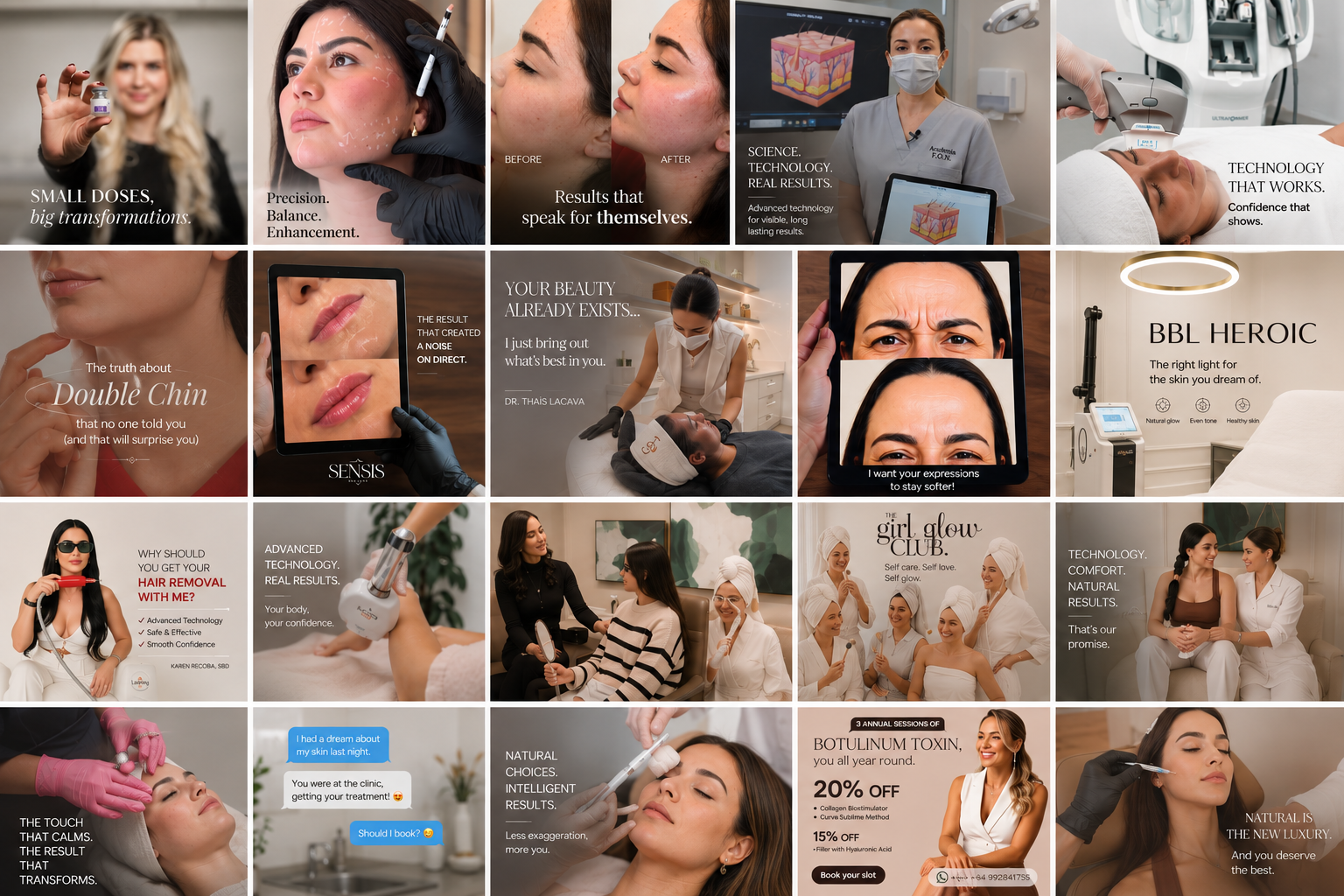
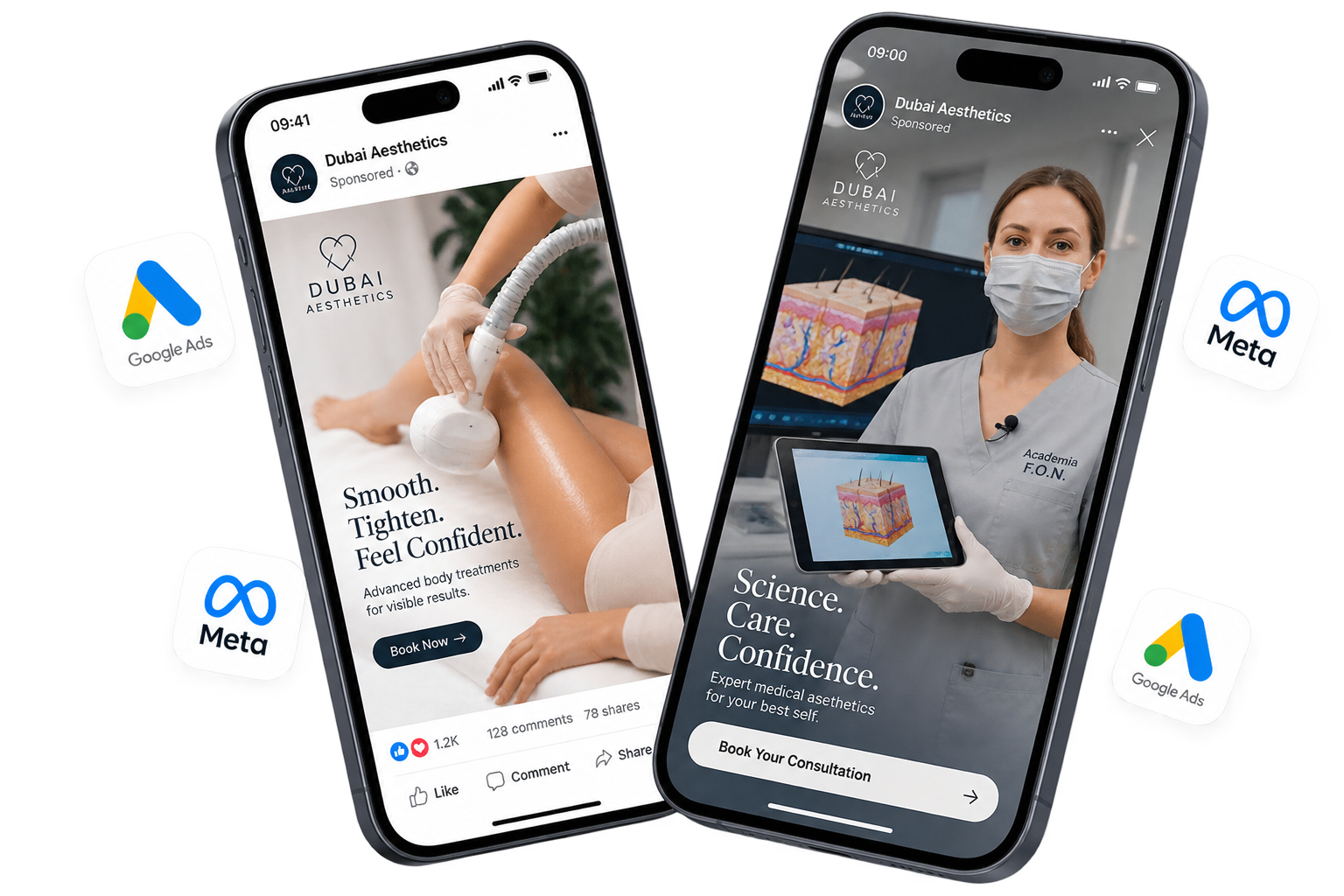
A sweep of aesthetic clinic advertising in the wild. Read it next to the demand data and the pattern is hard to miss: near-identical promises, near-identical treatment focus, and almost nothing pointed at the one term nobody is defending.

Demand up the side, auction pressure across the bottom, cost per click as the size of the dot. Where a treatment lands tells you what to do with it.
Four moves, each drawn from where a treatment landed on the map rather than from what is easiest to sell.
The only treatment on the menu with real volume and an empty auction, at a ticket that justifies the click.
Its own campaign, its own landing page, and the majority of the search budget. Not a line on a treatments page.
Maximum auction pressure on the lowest-value treatment. Winning it costs attention that is worth more elsewhere.
Keep it as a first-visit offer measured on what the patient books next, not as a headline acquisition play.
The largest and steadiest demand in the market is for a person to trust, not a procedure to buy.
Build the doctors real pages with credentials, cases and availability, and point this traffic at them.
A fivefold swing is not noise. It is the single largest structural fact about this market's calendar.
Stage creative and budget six weeks ahead of the January peak, and cut deliberately through the summer instead of drifting.
Sequenced so the cheapest fixes land before the expensive ones.
Response time, enquiry routing and consult reminders come first. Ten points gained on booked consults is worth more than ten percent off the click price, and it costs nothing in media.
Fillers gets its own campaign and landing page. Hydrafacial drops to a gateway offer. Practitioner pages go live and take the dermatologist traffic.
Run the creative territories against each other, retire what loses, and build the January capsule while the market is quiet and inventory is cheap.
These are the numbers we would report against from day one, and the ones that would appear here if this were a real engagement.
Measured in minutes. In this market it moves booked consults more than creative does.
Whether the budget shift is actually changing which treatment walks through the door.
Held per treatment and per campaign, never blended across the account.
Against real treatment value and repeat cycle, not against enquiry counts.
We'll price every treatment you offer against real demand, competition and click cost, and tell you which one should be carrying your advertising.